7 Types of E-commerce Packaging for Faster Dispatch
Published 15 May 2026 by Nathan Calvert
• Updated on 15 May 2026
• 10 min read
When orders are coming in quickly, packaging can either keep your dispatch line moving or slow the whole thing down.
For e-commerce brands and 3PL fulfilment teams, the right pack format matters. It affects pick-and-pack time, storage space, labour cost, product protection, presentation and customer experience.
This guide looks at seven types of e-commerce packaging that can help speed up dispatch, starting with the fastest solution on the market: QuikPak®.
What is E-commerce Packaging?
E-commerce packaging is packaging designed for products sold online and shipped through courier, postal or 3PL fulfilment networks.
It is not just a box or envelope. Good e-commerce packaging should protect the product, be quick to pack, use space well in storage, carry your brand properly and give the customer a tidy, frustration-free opening experience.
For packing teams, the biggest gains usually come from removing wasted movements. That means less folding, less taping, less void fill, fewer pack sizes and fewer decisions at the packing bench.
Common time-saving features include peel-and-seal strips, tear-open strips, pre-glued bases, variable depth creases, retention systems and formats that arrive made-ready. Made-ready means the pack is already formed or part-assembled, so the packer can load, close and send with minimal handling.
That is where modern e-commerce packaging earns its place. The best format is not always the cheapest unit price on a spreadsheet. It is the one that gives you the lowest total cost to ship, including labour, storage, damages, returns and customer satisfaction.
1. QuikPak®: The Fastest E-commerce Packaging Solution on the Market
Wondering What's faster than a crash lock box?
QuikPak® is built for one clear job: faster dispatch.
Crash lock boxes are often described as the quickest e-commerce packaging option. They are quick compared with standard 0201 cartons, which need more folding and taping. But QuikPak goes further. Its made-ready design removes even more handling from the packing process, making it quicker than crash lock boxes in real packing environments.
With QuikPak, the packer is not spending time squaring up a box, locking the base, reaching for tape or building the pack from flat. The format is designed to be ready to load, close and dispatch. That small time saving on one parcel can become a big labour saving across thousands of orders.
QuikPak is especially useful for fast-moving e-commerce operations where every second matters, such as fashion, cosmetics, electronics accessories, health products, subscription goods and 3PL pick-and-pack lines.
Key features include:
Made-ready construction: reduces packing steps and keeps the line moving.
Faster than crash lock boxes: ideal where pack speed is the main priority.
Clean presentation: gives customers a neater unboxing experience than basic mailing formats.
Lower labour demand: fewer folds, fewer actions and less packer fatigue.
Reduced packaging waste: helps avoid over-packing and unnecessary void fill.
Brand-friendly design: suitable for custom print and customer-facing e-commerce packaging.
If your team is packing high volumes and still using crash lock boxes as your benchmark for speed, QuikPak should be the next format to test.
2. FlyPak®: Variable Retention Packaging for Faster, Smarter Packing
FlyPak® is a clever alternative to traditional crash lock boxes, especially when you need one packaging format to handle a wider range of product sizes.
Its pop-up construction is quick to use, but the real benefit sits inside the pack. FlyPak uses a rigid variable-height retention system. In plain English, that means the product is held in place inside the pack without the need for loads of extra void fill.
For e-commerce brands, this can solve several problems at once. You can reduce the number of box sizes in your warehouse, cut packing material use and give the customer a cleaner opening experience.
FlyPak also works well for branding. The construction allows artwork to appear under the lid, giving the customer a strong branded moment when they open the pack. This is useful for products where the unboxing experience matters, such as cosmetics, technology, accessories, gifts and premium retail.
From a logistics point of view, FlyPak is supplied flat and at a slim 2-ply thickness. That helps with palletisation, which means more packaging can fit on a pallet, reducing storage pressure in busy fulfilment areas.
3. Crash Lock Boxes
Crash lock boxes are a popular choice for e-commerce packing lines. The base locks into position quickly, so they are much faster to assemble than a standard taped box.
They are a strong option for retailers that need speed, presentation and protection. The pre-glued base reduces assembly time, and the structure gives good product protection during transit.
That said, crash lock boxes are not always the fastest solution. They still need to be opened out, squared up and closed properly. For many years they have been treated as the quick-pack benchmark, but made-ready formats like QuikPak can reduce handling further.
Crash lock boxes still have a valuable place. They are reliable, familiar to packing teams and suitable for a wide range of products. They also work well for custom print, so they can carry a strong branded look without slowing the packing process too much.
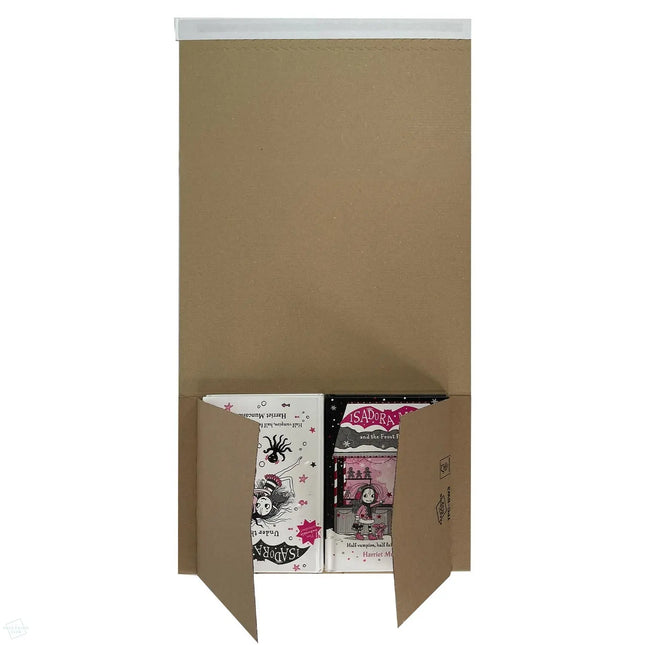
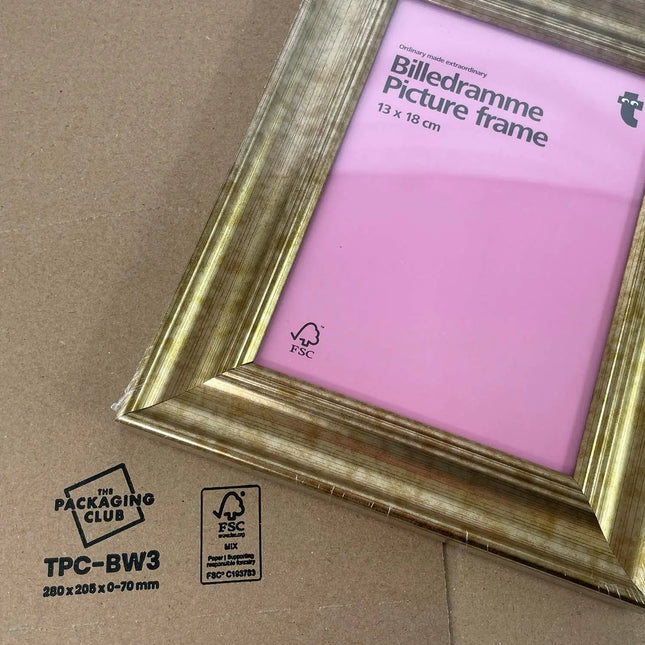
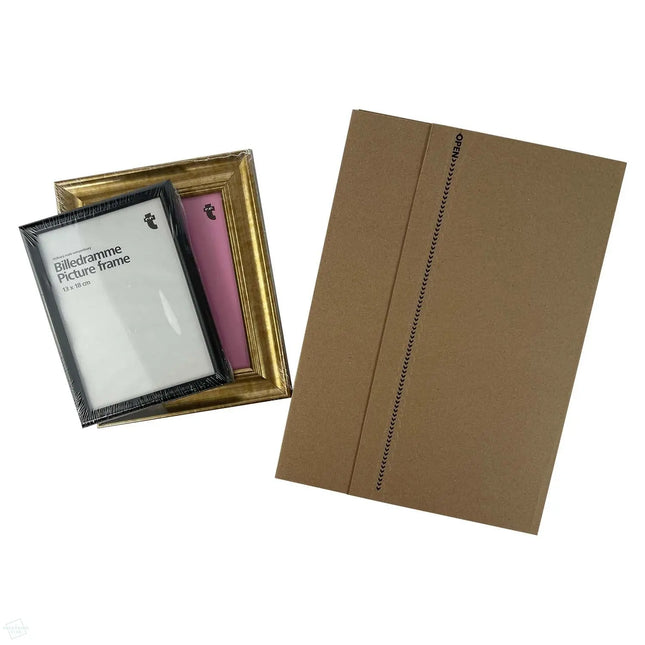
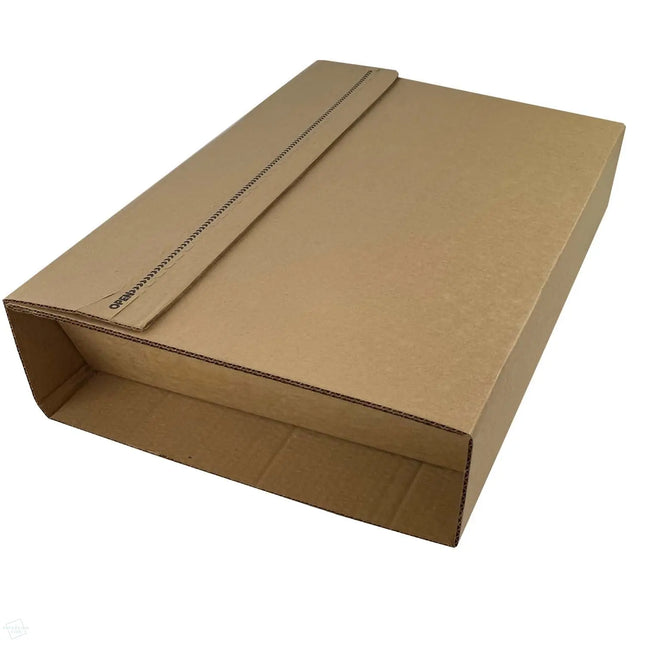
4. Book Wraps
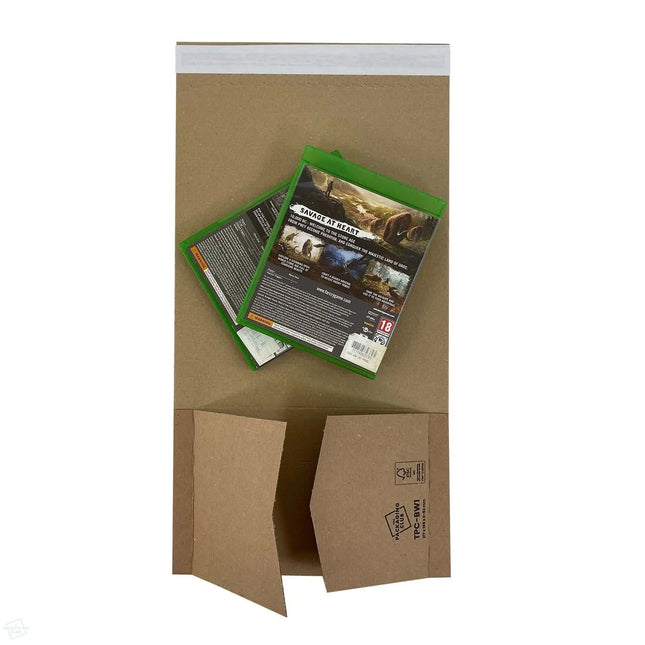
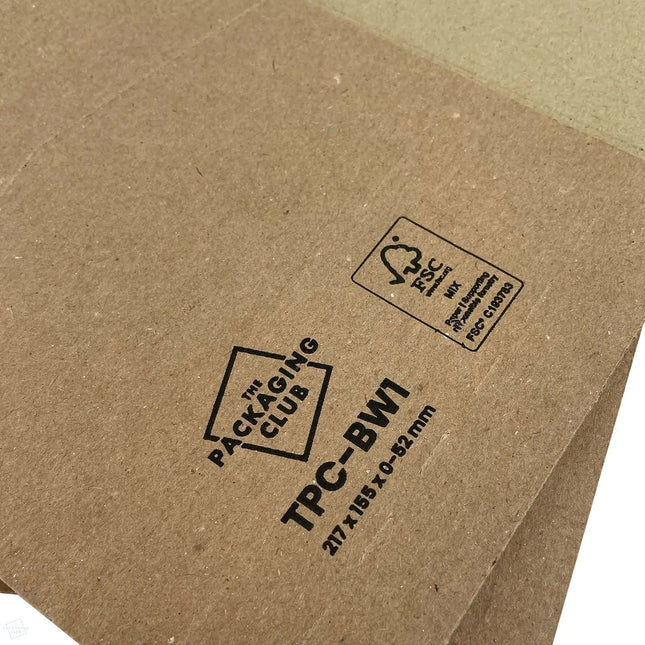
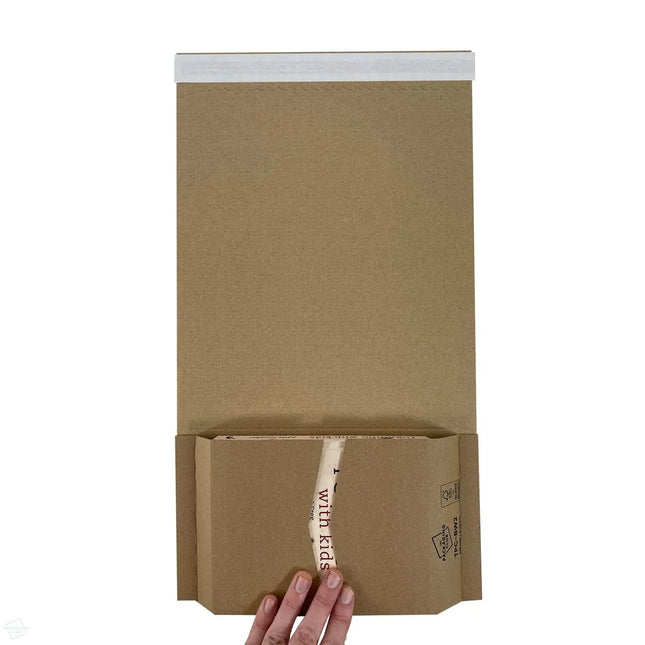
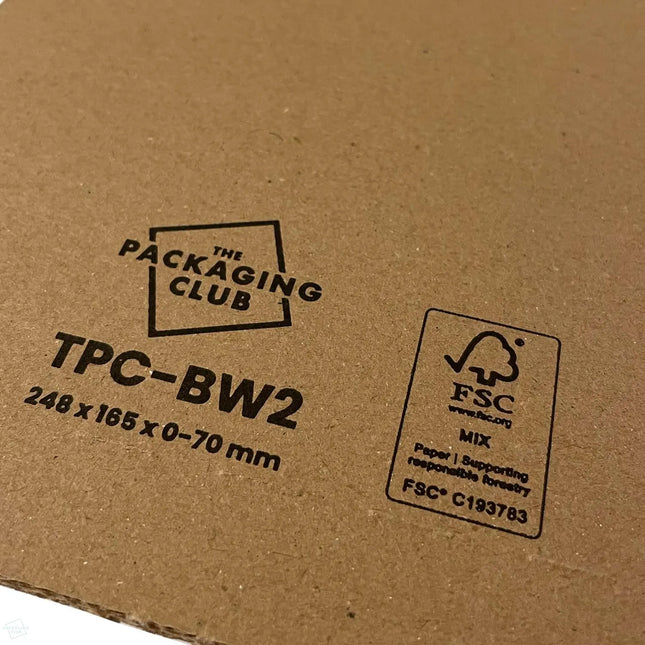
Book wraps are made for books, catalogues, games, stationery, DVDs and other flat items.
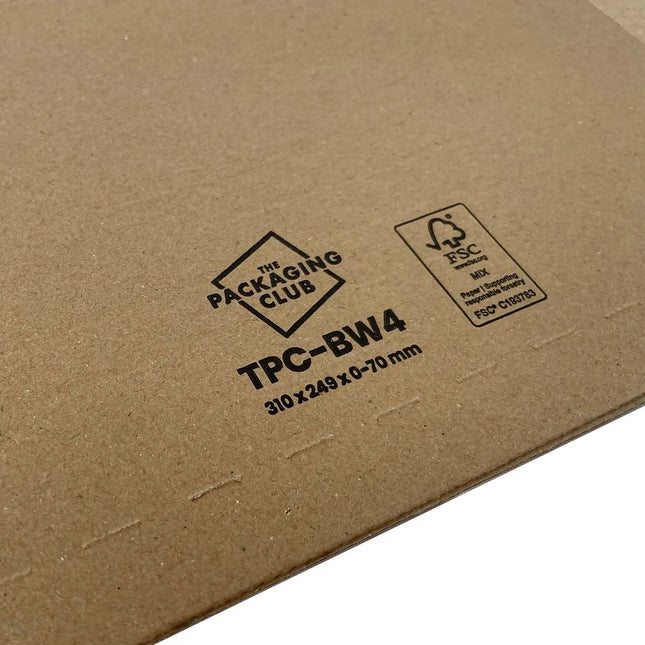
The wrap-around design keeps the product secure and gives extra protection around the edges and corners, which are common damage points in transit. Many book wraps include variable depth creases, so one format can handle several product thicknesses.
For packing teams, book wraps are straightforward. Place the product in the centre, fold the sides, seal the pack and send. They are quick, neat and often more suitable than a standard box for slim products.
They also help reduce empty space. That matters for postage, courier pricing, storage and damage control. Less empty space means less product movement during transit.
5. E-commerce Envelopes and Mail Bags
E-commerce envelopes are ideal for smaller, lighter products that do not need a full box. They are commonly used for documents, accessories, SIM cards, small electronics, beauty products, jewellery, stationery and lightweight retail items.
Cardboard envelopes, solid board envelopes and corrugated envelopes offer more rigidity than a standard paper envelope. That extra stiffness helps prevent bending and gives a more professional feel on arrival.
Mail bags can be even quicker for soft goods such as fashion, textiles and non-fragile accessories. Custom printed mailing bags can give brands a simple, lightweight and flexible dispatch option.
For packing speed, peel-and-seal closures are the main benefit. The packer does not need a tape gun, and the closure is neat and consistent.
6. Padded Mailers
Padded paper mailers are useful when a standard envelope is too light, but a box feels excessive.
They are commonly used for cosmetics, accessories, small gifts, jewellery, tech accessories and health products. The padded layer gives cushioning, which helps absorb knocks during handling and delivery.
Paper padded mailers are a strong alternative to traditional plastic bubble mailers for brands that want to reduce plastic in their packaging range. They are quick to pack, easy to store and better suited to slim products than bulky cartons.
The main thing is to match the mailer to the product. If the item is crushable, sharp-edged or high value, a rigid pack or retention pack may be a better choice.
7. Flutelopes
Flutelopes, also known as fluted envelopes or fluted mailers, sit between a standard envelope and a small postal box.
The fluted paper layer gives extra protection without adding too much weight. This makes them useful for items that need more support than a basic envelope, but do not justify a full carton.
They are well suited to documents, prints, certificates, calendars, thin books, stationery, small parts and flat retail products.
For dispatch teams, flutelopes are quick to use, easy to stack and simple to store. They are a practical choice when you need a low-profile pack with a bit more structure.
Choosing the Right Packaging for Faster Dispatch
There is no single packaging format that suits every product. The fastest option depends on what you sell, how many orders you pack, how your team works and how much protection your products need.
For pure speed, QuikPak® is the standout choice. Its made-ready design makes it quicker than crash lock boxes and helps remove wasted handling from the packing bench.
For mixed product sizes, FlyPak® is a strong option because its retention system can reduce the need for multiple carton sizes and extra void fill.
Crash lock boxes still work well when you need speed, strength and a familiar format. Book wraps, envelopes, mail bags, padded mailers and flutelopes all have their place too, especially when matched properly to the product.
The aim is simple: pack faster, protect better, store less and give customers a better delivery experience.
Need to speed up dispatch without compromising the customer experience? The Packaging Club designs and supplies bespoke e-commerce packaging for brands, retailers and 3PL operations across the UK.
From QuikPak and FlyPak to custom printed boxes, mailers and envelopes, we can help you find a pack format that cuts packing time, protects products and makes your brand look sharper on delivery.
With over 15 years in the packaging industry, Nathan brings hands-on experience across design, production, and digital transformation. His content helps readers understand how packaging decisions impact operations, efficiency, and long-term growth.